
An air conditioner is a mechanical system designed to control indoor temperature, humidity, and, in many cases, air quality. While many people think of air conditioners simply as machines that “blow cold air,” their true function is to remove heat from indoor spaces and transfer it outdoors.
The primary purpose of an air conditioner is to create a comfortable indoor environment—especially in hot or humid climates. Beyond cooling, modern systems also help regulate humidity levels, filter airborne particles, and improve overall air circulation.
At its core, air conditioning is based on one simple scientific principle: heat moves from warmer areas to cooler areas. Air conditioners use this principle to extract heat from inside your home and release it outside, leaving your indoor space cooler and more comfortable.
How Air Conditioners Work
The Refrigeration Cycle
Air conditioners operate using what’s known as the refrigeration cycle. This process relies on a chemical compound called a refrigerant, which absorbs and releases heat as it changes between liquid and gas states.
Here’s how it works in simple terms:
- The refrigerant absorbs heat from indoor air.
- It travels through the system and releases that heat outdoors.
- The cooled refrigerant cycles back inside to repeat the process.
This continuous loop allows the system to maintain a stable indoor temperature.
Main Components
Every air conditioner, regardless of type, contains several key components:
Compressor
Often called the “heart” of the system, the compressor pressurizes the refrigerant and keeps it moving through the cycle.
Condenser Coil
Located in the outdoor unit (for split and central systems), the condenser releases the heat collected from indoors into the outside air.
Evaporator Coil
Positioned inside the home, this coil absorbs heat from indoor air as it passes over it.
Expansion Valve
This component regulates the flow of refrigerant and lowers its pressure before it enters the evaporator coil.
Thermostat
The thermostat monitors room temperature and signals the system to turn on or off based on your selected settings.
Together, these parts create a closed-loop system that continuously removes heat and maintains comfort.
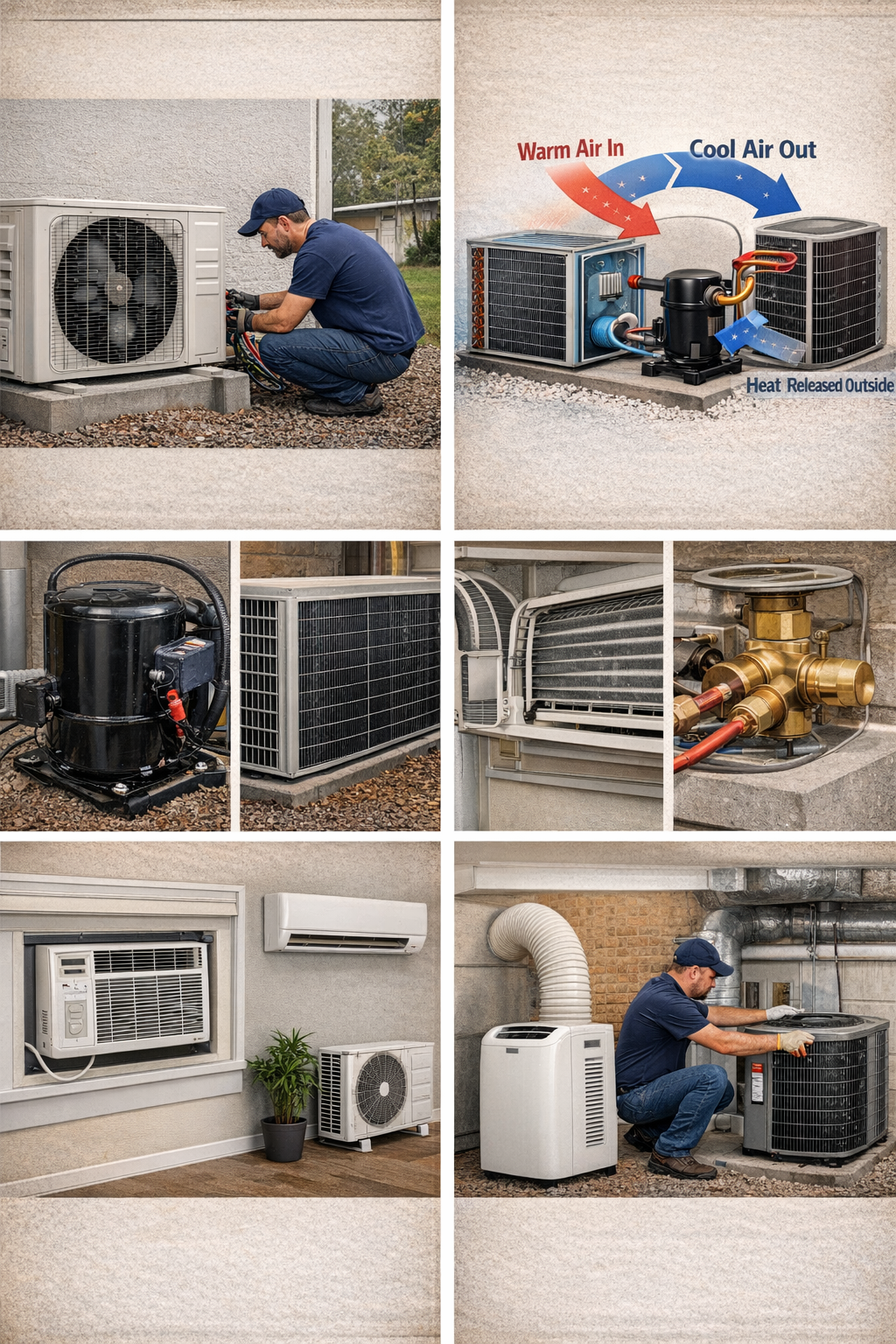
Types of Air Conditioners
Air conditioners come in various designs to suit different needs and building layouts.
Window Air Conditioners
Window units are compact, self-contained systems installed in a window or wall opening. They are ideal for cooling single rooms or small apartments. Because all components are housed in one unit, installation is relatively straightforward.
Best for: Small spaces and budget-conscious users.
Split Air Conditioners
Split systems consist of two units: an indoor air-handling unit and an outdoor compressor/condenser unit. These systems operate more quietly and are common in homes and offices.
They offer better aesthetics and efficiency compared to window units.
Best for: Bedrooms, living rooms, and offices requiring quieter operation.
Portable Air Conditioners
Portable units are movable systems placed on the floor and vented through a window using an exhaust hose. They are flexible and require minimal installation.
Best for: Temporary cooling or rental properties where permanent installation isn’t possible.
Central Air Conditioning Systems
Central air systems cool entire homes or buildings using ductwork to distribute conditioned air throughout multiple rooms. They are controlled by a central thermostat and are typically integrated into the home’s HVAC system.
Best for: Whole-house cooling and consistent temperature control.
Key Features and Specifications
When shopping for an air conditioner, understanding technical specifications is essential.
Cooling Capacity (BTU)
Measured in British Thermal Units, BTU indicates how much heat the unit can remove per hour. Larger rooms require higher BTU ratings.
Energy Efficiency Ratio (EER)
Measures cooling efficiency under specific conditions.
Seasonal Energy Efficiency Ratio (SEER)
Represents overall efficiency across an entire cooling season. Higher SEER ratings mean better energy performance.
Inverter vs. Non-Inverter Technology
- Inverter ACs adjust compressor speed to maintain consistent temperatures and use less energy.
- Non-inverter ACs turn on and off repeatedly, consuming more electricity.
Air Filtration Systems
Modern units may include filters for dust, pollen, allergens, and even odors.
Smart Controls
Wi-Fi-enabled systems allow remote control via smartphone apps and programmable schedules for energy savings.
Energy Efficiency and Environmental Impact
Air conditioners account for a significant portion of household electricity use, especially in hot climates. Choosing an energy-efficient model can substantially reduce power bills and environmental impact.
Modern systems use improved refrigerants with lower environmental impact compared to older substances like R-22, which has been phased out in many countries.
Governments often enforce efficiency standards and labeling systems to guide consumers toward more sustainable options. High-efficiency units not only lower emissions but also reduce long-term operating costs.
Installation Requirements
Proper installation plays a critical role in performance and longevity.
Correct Sizing
An undersized unit struggles to cool a room, while an oversized unit cycles on and off too frequently, wasting energy.
Ventilation
Portable and window units require proper venting. Split and central systems need adequate outdoor airflow around the condenser.
Electrical Requirements
Larger systems may require dedicated circuits.
Professional Installation vs. DIY
- Window and portable units can often be installed by homeowners.
- Split and central systems typically require professional installation for refrigerant handling and electrical safety.
Maintenance and Care
Routine maintenance keeps your air conditioner efficient and extends its lifespan.
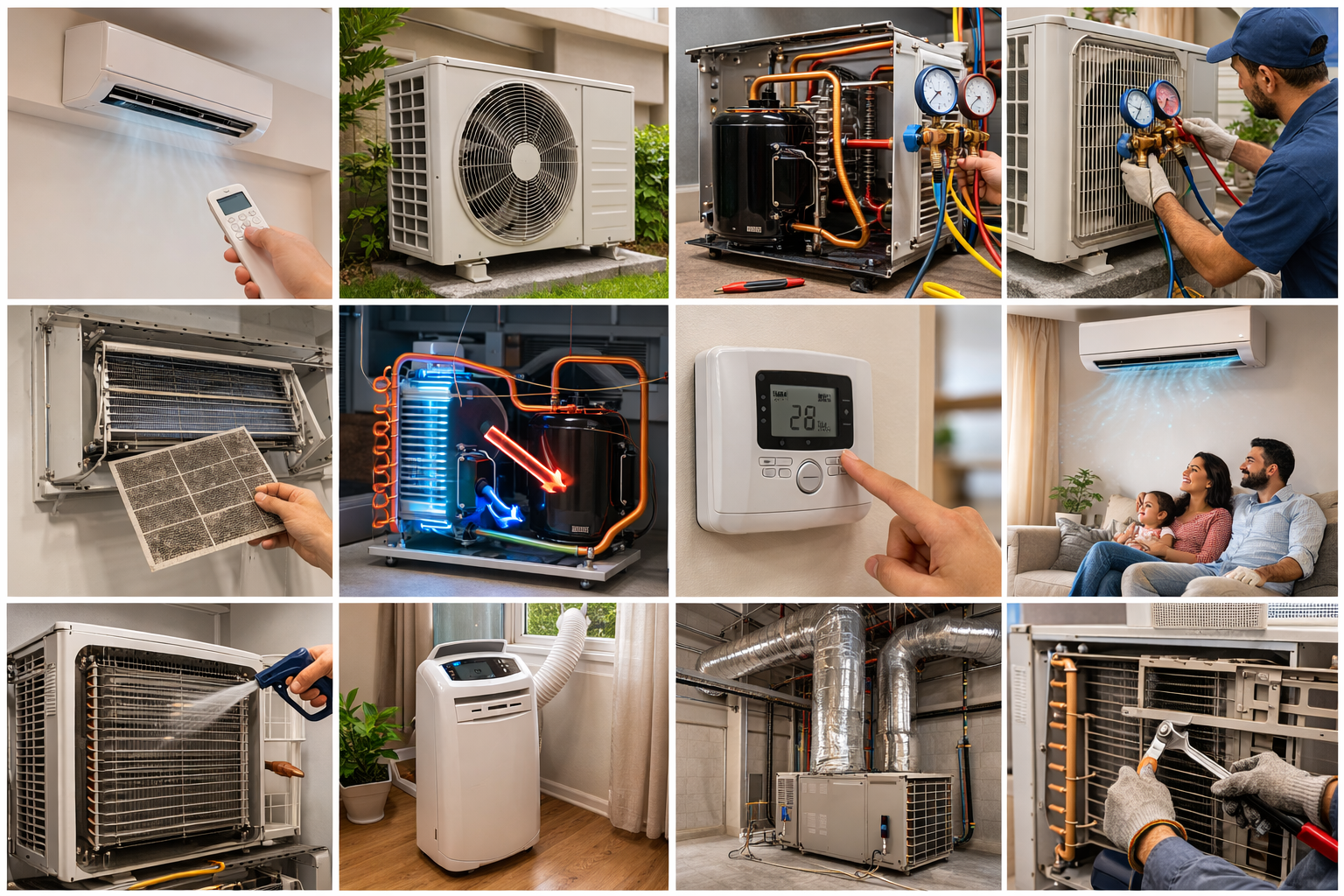
Clean or Replace Air Filters
Dirty filters reduce airflow and strain the system. Check monthly during heavy use.
Check Refrigerant Levels
Low refrigerant can reduce cooling performance and damage the compressor.
Clean Coils
Both evaporator and condenser coils should remain free of dust and debris.
Professional Servicing
Annual inspections help identify small problems before they become costly repairs.
Signs of Common Issues:
- Weak airflow
- Unusual noises
- Water leakage
- Warm air blowing instead of cool
Advantages and Limitations
Advantages
- Improved indoor comfort
- Better air quality with filtration
- Reduced humidity levels
- Increased productivity and sleep quality
Limitations
- Higher energy consumption
- Initial purchase and installation costs
- Ongoing maintenance requirements
Understanding both sides helps homeowners make informed decisions.
Common Problems and Troubleshooting
Unit Not Cooling Properly
Often caused by dirty filters, low refrigerant, or thermostat settings.
Water Leakage
May result from a clogged drain line or frozen evaporator coil.
Strange Odors
Usually due to mold buildup or dirty filters.
Thermostat Malfunction
Incorrect calibration can cause uneven cooling.
Frozen Coils
Often linked to restricted airflow or refrigerant issues.
Early troubleshooting can prevent major system damage.
Conclusion
Air conditioners function by removing heat from indoor air and transferring it outdoors through a continuous refrigeration cycle. While the technology behind them is sophisticated, the goal is simple: provide consistent indoor comfort.
Choosing the right type and size for your space is crucial for efficiency and performance. Equally important is regular maintenance, which ensures long-term reliability and lower operating costs.
With proper selection, installation, and care, an air conditioner can provide years of dependable cooling and improved indoor living conditions.