Hybrid Heat Systems: How Dual-Fuel HVAC Technology Improves Home Heating Efficiency
A hybrid heat system, often referred to as a dual fuel HVAC system, is a modern heating solution that combines two different technologies: a heat pump and a gas furnace. These two systems work together to provide efficient heating throughout the year by using the most appropriate energy source based on outdoor conditions. In traditional HVAC systems, a home typically relies on a single heating source, such as a gas furnace or an electric heating system. Hybrid heat systems improve on this approach by integrating the strengths of both technologies. The heat pump handles heating during mild temperatures, while the gas furnace provides additional heating power when the weather becomes very cold. The primary purpose of hybrid heating systems is to increase energy efficiency and comfort. By automatically switching between electricity and gas depending on which option is more efficient at a given time, the system can reduce overall energy consumption and maintain consistent indoor temperatures. As homeowners become more focused on energy savings and environmental sustainability, hybrid heat systems are becoming increasingly popular in residential HVAC installations. Many modern homes and HVAC upgrades now consider dual-fuel systems as a practical and efficient heating solution. Basic Concept of Hybrid Heating The concept behind hybrid heating is relatively simple: combine two different heating methods so the system can use the most efficient energy source under different conditions. A heat pump works by transferring heat from the outdoor air into the home rather than generating heat directly. This process is very efficient when outdoor temperatures are moderate. However, when temperatures drop significantly, heat pumps become less efficient because there is less heat available in the outside air to extract. This is where the gas furnace becomes important. Gas furnaces generate heat through combustion and can produce strong, consistent heating regardless of how cold it is outside. A hybrid system continuously monitors outdoor temperature and indoor comfort levels. When temperatures are mild, the system relies on the heat pump to heat the home efficiently. When temperatures fall below a certain point, the system automatically switches to the gas furnace. This intelligent switching allows the system to maintain comfort while minimizing energy use and operating costs. Main Components of a Hybrid Heat System Hybrid heating systems consist of several components that work together to deliver efficient heating and cooling. Heat Pump The heat pump is a central part of the hybrid system. It functions as both a heating and cooling unit. During colder seasons, the heat pump extracts heat from the outdoor air and transfers it indoors. In warmer seasons, it reverses the process and removes heat from inside the home to provide cooling. Heat pumps are highly efficient in moderate temperatures because they move heat rather than producing it through combustion or electric resistance. Gas Furnace The gas furnace acts as the secondary heating source in a hybrid system. When outdoor temperatures become too low for the heat pump to operate efficiently, the furnace automatically activates. Gas furnaces generate heat by burning natural gas or propane in a controlled combustion chamber. This allows them to produce strong and reliable heating even during very cold weather conditions. Thermostat and Smart Controls The thermostat plays a crucial role in managing the hybrid heating system. Modern hybrid systems typically use programmable or smart thermostats that monitor indoor and outdoor temperatures. These controls determine when to switch between the heat pump and the furnace. Smart thermostats may also allow homeowners to adjust temperature schedules, monitor energy usage, and control the system remotely. Air Handler and Blower The air handler and blower motor are responsible for circulating conditioned air throughout the home. Once air is heated by either the heat pump or the furnace, the blower pushes the warm air through the duct system and into different rooms. Proper airflow ensures even temperature distribution and helps maintain comfort across the entire home. Ductwork System The ductwork system acts as the pathway that delivers heated or cooled air to each room. It connects the heating equipment to supply vents located throughout the house. Well-designed ductwork is essential for efficient system performance. Leaks or poorly designed ducts can reduce airflow and decrease overall energy efficiency. How a Hybrid Heat System Works Hybrid heat systems operate through an automated process that allows them to choose the most efficient heating method. Step-by-Step Operation Key Processes Heat Transfer in Heat Pumps Heat pumps move heat from one place to another using refrigerant and compressors. This process requires less energy than generating heat directly. Combustion in Gas Furnaces Gas furnaces produce heat through the combustion of natural gas or propane, generating powerful heating even in extreme cold. Automatic Energy Switching The system automatically selects the most efficient heating method based on temperature conditions and energy efficiency. Advantages of Hybrid Heat Systems Hybrid heating systems offer several advantages compared to traditional single-fuel heating systems. Energy Efficiency Hybrid systems improve energy efficiency by using electricity when it is more effective and switching to gas only when necessary. Lower Energy Costs Because the system optimizes energy use, homeowners often experience reduced heating costs compared to relying solely on a furnace or electric heating system. Consistent Home Comfort By combining two heating technologies, hybrid systems can maintain stable indoor temperatures throughout the year. Environmental Benefits Using a heat pump during mild conditions reduces fossil fuel consumption and can lower greenhouse gas emissions associated with home heating. Ideal Applications for Hybrid Heating Hybrid heat systems are particularly effective in regions with moderate winters and changing temperatures. They work well in: In extremely cold climates where temperatures remain below freezing for long periods, the furnace may operate more frequently. However, hybrid systems still provide flexibility and efficiency benefits. Installation Considerations Installing a hybrid heat system requires careful planning to ensure optimal performance. Key installation factors include: Incorrect installation can reduce efficiency and lead to operational problems. Maintenance Requirements Routine maintenance is essential to keep hybrid heating systems operating efficiently. Routine Maintenance Tasks Common maintenance tasks include: Professional Maintenance Homeowners
Gas Furnaces: A Complete Guide to How They Work, Components, Efficiency, and Maintenance
A gas furnace is a heating system designed to warm indoor spaces by burning fuel typically natural gas or propane to generate heat. It is one of the most common heating solutions used in residential HVAC systems, especially in colder climates where reliable heating is essential during winter months. The primary role of a gas furnace in a home heating system is to produce warm air and distribute it throughout the house using a network of ducts and vents. When the indoor temperature drops below the desired level set on the thermostat, the furnace automatically activates and begins generating heat to maintain comfort inside the home. Gas furnaces are typically installed in locations where they can safely operate and connect to ductwork and venting systems. Common installation locations include basements, attics, garages, or utility closets, depending on the home’s layout and available space. Gas furnaces differ from electric furnaces mainly in the way they generate heat. Gas furnaces burn fuel to produce heat, which tends to be more energy efficient and cost effective in areas where natural gas is readily available. Electric furnaces, on the other hand, rely on electrical heating elements to produce warmth. While electric furnaces are generally simpler to install and maintain, gas furnaces usually provide stronger heating performance and lower long term operating costs in many regions. Main Components of a Gas Furnace A gas furnace consists of several important components that work together to safely and efficiently generate heat and distribute it throughout the home. Thermostat The thermostat acts as the control center for the heating system. It monitors the indoor temperature and compares it to the temperature setting chosen by the homeowner. When the room temperature falls below the set point, the thermostat sends a signal to the furnace to start the heating cycle. Once the desired temperature is reached, the thermostat signals the system to shut off. Modern thermostats may be programmable or smart, allowing users to schedule heating cycles and improve energy efficiency. Burners The burners are responsible for producing heat through combustion. They mix natural gas or propane with air and ignite the mixture to create a controlled flame. This flame generates heat that is transferred to the heat exchanger. In modern furnaces, electronic ignition systems are commonly used instead of traditional pilot lights, making the system more energy efficient and safer. Heat Exchanger The heat exchanger is a critical component that transfers heat from the combustion process to the air that circulates through the home. It is typically made of durable metal designed to withstand high temperatures. The heat exchanger ensures that combustion gases such as carbon monoxide remain separated from the indoor air supply. This separation is essential for maintaining safe indoor air quality. Blower Motor The blower motor powers a fan that pushes heated air through the furnace and into the home’s ductwork. Once the air passes through the heat exchanger and becomes warm, the blower circulates it through vents in different rooms, distributing heat evenly throughout the house. The blower continues running until the thermostat detects that the desired indoor temperature has been reached. Flue or Venting System The flue or venting system removes combustion gases produced during the heating process and safely directs them outdoors. These gases may include carbon dioxide, water vapor, and small amounts of carbon monoxide. High efficiency furnaces often use PVC vent pipes instead of traditional metal chimneys. These systems rely on special venting designs to safely remove exhaust gases while maximizing energy efficiency. Safety Controls Gas furnaces are equipped with multiple safety controls to ensure safe operation. Key safety components include: Flame sensor: Detects whether the burner flame is present. If the flame goes out unexpectedly, the sensor shuts off the gas supply to prevent gas buildup. Limit switch: Prevents overheating by shutting down the furnace if internal temperatures become too high. Pressure switch: Ensures proper airflow through the venting system before allowing the burners to operate. These safety devices help protect both the furnace and the occupants of the home. How a Gas Furnace Works A gas furnace operates through a carefully controlled heating cycle designed to provide consistent warmth while maintaining safety. Step-by-Step Heating Cycle Thermostat Detects Temperature Drop The heating cycle begins when the thermostat senses that the indoor temperature has fallen below the set level. Gas Valve Opens and Burners Ignite The thermostat sends a signal to the furnace control board, which opens the gas valve. Gas flows to the burners, and an ignition system lights the burners to begin combustion. Heat Exchanger Warms Up The burner flames heat the heat exchanger, allowing it to transfer heat to the surrounding air. Blower Fan Distributes Heated Air Once the heat exchanger reaches the proper temperature, the blower motor activates and pushes warm air through the duct system and into the living spaces. Exhaust Gases Vent Outside Combustion gases are safely expelled through the flue or venting system. System Shuts Off When the thermostat senses that the desired temperature has been reached, it signals the furnace to shut off. The burners stop, and the blower may continue running briefly to distribute remaining heat. Key Processes Involved Combustion Process The combustion process involves burning natural gas or propane in a controlled environment to produce heat energy. Airflow Circulation Air from the home is pulled into the furnace, heated as it passes the heat exchanger, and then distributed through the duct system. Safety Monitoring Throughout the heating cycle, sensors and safety switches constantly monitor temperature, airflow, and flame stability to ensure safe operation. Types of Gas Furnaces Gas furnaces come in several types, each offering different levels of efficiency and temperature control. Single-Stage Furnace A single-stage furnace operates with only one heating output level full capacity. When it turns on, it runs at maximum power until the thermostat setting is reached. These systems are simple and affordable but may produce noticeable temperature fluctuations. Two-Stage Furnace A two-stage
Air Handlers: Components, Operation, Types, and Importance in HVAC Systems
An air handler, often referred to as an Air Handling Unit (AHU), is a key component of many heating, ventilation, and air conditioning (HVAC) systems. Its primary role is to circulate and regulate air throughout a building as part of the heating or cooling process. While the air handler itself does not typically generate heating or cooling, it works closely with other HVAC components such as heat pumps, air conditioners, or furnaces to distribute conditioned air throughout indoor spaces. In a typical HVAC setup, the air handler pulls air from inside the building, conditions it by passing it through various components, and then sends it back through ductwork into different rooms. This process helps maintain comfortable indoor temperatures and ensures consistent air circulation. Air handlers are often confused with air conditioners or furnaces, but they serve different purposes. An air conditioner’s outdoor condenser unit is responsible for releasing heat outside, while the air handler manages airflow inside the building. Similarly, a furnace generates heat, whereas the air handler distributes the heated air throughout the space. Air handlers are commonly installed in areas such as utility closets, attics, basements, or mechanical rooms, depending on the building’s design and available space. Their location is chosen to allow efficient connection to ductwork and easy maintenance access. Main Components of an Air Handler An air handler consists of several important parts that work together to circulate and condition indoor air. Blower Motor and Fan The blower motor and fan assembly is responsible for moving air through the HVAC system and distributing it throughout the building. When the system is running, the blower pulls air through return ducts and pushes it through the air handler before sending it into the supply ducts. Blower motors come in different types: Single speed motors, which operate at one constant speed Multi speed motors, which allow several airflow levels Variable speed motors, often called ECM (Electronically Commutated Motors), which automatically adjust airflow based on the system’s needs Variable speed motors are considered the most energy efficient because they can adjust airflow gradually rather than switching on and off abruptly. This helps maintain consistent indoor temperatures while reducing energy consumption. Evaporator (Cooling) Coil The evaporator coil is responsible for absorbing heat from indoor air during the cooling process. It works together with the outdoor condenser unit in a split air conditioning system. As warm indoor air passes over the coil, refrigerant inside the coil absorbs heat from the air. This heat is then transferred outside through the condenser unit. During this process, the air becomes cooler before being circulated back into the home. The evaporator coil also plays an important role in humidity control. As warm air cools on the coil surface, moisture condenses into water droplets. This helps remove excess humidity from indoor air, improving comfort and indoor air quality. Heating Element (Optional) Some air handlers include electric resistance heating elements, often referred to as heating strips. These elements provide additional heat when needed. Heating strips are commonly used in heat pump systems. During very cold weather, heat pumps may require supplemental heating to maintain comfortable indoor temperatures. In such cases, the electric heating elements activate to provide extra warmth. Air Filter The air filter is a simple yet essential part of an air handler. Its purpose is to capture dust, pollen, pet dander, and other airborne particles before the air circulates through the HVAC system. Air filters help protect internal components from dirt buildup while also improving indoor air quality. However, clogged filters can restrict airflow, reduce efficiency, and strain the blower motor. Because of this, air filters should typically be replaced every one to three months, depending on usage and environmental conditions. Drain Pan and Condensate Line When the evaporator coil removes humidity from indoor air, the resulting moisture collects in a drain pan located beneath the coil. The water then flows out of the system through a condensate drain line. This drainage system is important for preventing water damage, mold growth, and humidity problems. If the drain line becomes clogged, water can overflow and cause damage to surrounding areas. How an Air Handler Works An air handler operates through a continuous cycle of air circulation and conditioning. The process generally follows these steps: Return air enters the system through return ducts connected to various rooms in the building. The air passes through the air filter, which removes dust and airborne particles. The filtered air then moves across the evaporator coil, where it is cooled (or heated depending on the system). The blower fan pushes the conditioned air into supply ducts, distributing it throughout the building. During cooling, moisture condenses on the evaporator coil and drains away through the condensate system. This cycle repeats continuously while the system operates. The air handler also plays an important role in temperature regulation. When the thermostat signals that the indoor temperature needs adjustment, the HVAC system activates, and the air handler distributes the conditioned air accordingly. Additionally, the condensation process helps reduce humidity levels, making indoor spaces feel more comfortable, especially during warm and humid weather. Types of Air Handlers Air handlers come in several different designs depending on their intended application. Residential Air Handlers Residential air handlers are designed for homes and smaller buildings. They are usually compact and commonly paired with heat pumps. These systems may be installed in vertical or horizontal configurations, depending on the available space. For example, vertical units are often installed in closets or basements, while horizontal units are commonly placed in attics. Commercial Air Handling Units Commercial air handling units are much larger and more complex than residential systems. They are used in buildings such as offices, hospitals, shopping centers, and schools. These systems often have modular designs, allowing them to handle larger volumes of air. They may also include advanced features such as enhanced filtration systems, humidity control, ventilation systems, and energy recovery components. Multi-Position Air Handlers Multi-position air handlers offer greater installation flexibility because they can be installed either
Heat Pumps: Principles, Types, Efficiency, and Applications
A heat pump is a mechanical device designed to transfer heat from one location to another in order to regulate indoor temperature. Unlike traditional heating systems that generate heat by burning fuel or using electric resistance, heat pumps move existing heat from one place to another. This process makes them an efficient option for both heating and cooling indoor spaces. The primary purpose of a heat pump is to maintain comfortable indoor temperatures throughout the year. During colder months, it extracts heat from outdoor sources and transfers it indoors. During warmer months, the process reverses, removing heat from indoor air and releasing it outside. Because of this dual function, heat pumps serve as both heating systems and air conditioners. The main difference between heat pumps and traditional heating systems lies in how they produce warmth. Conventional heating systems, such as furnaces or electric heaters, create heat through combustion or electrical resistance. Heat pumps, on the other hand, operate by transferring heat energy rather than producing it directly. This approach requires significantly less energy because moving heat is more efficient than generating it from scratch. At the core of heat pump technology is a simple principle heat naturally flows from warmer areas to cooler ones. However, with the help of mechanical work and refrigerant cycles, heat pumps can reverse this natural flow and move heat from colder environments to warmer ones. This capability allows them to provide efficient heating even when outdoor temperatures are relatively low. How Heat Pumps Work Heat Transfer Principle The operation of a heat pump is based on the principle of heat transfer. Heat naturally moves from areas of higher temperature to areas of lower temperature. A heat pump uses mechanical energy to reverse this process, enabling it to capture heat from a cooler environment and deliver it to a warmer space. In heating mode, the system collects heat from an external source such as outdoor air, ground, or water, and transfers it into the building. In cooling mode, the system works in reverse, removing heat from indoor air and releasing it outdoors. This ability to reverse the heat transfer process allows heat pumps to function as both heaters and air conditioners. The Refrigeration Cycle Heat pumps rely on a refrigeration cycle similar to the one used in refrigerators and air conditioners. This cycle involves a special fluid called refrigerant that circulates through a closed loop of pipes and coils. The refrigerant undergoes changes in pressure and temperature throughout the cycle. When the refrigerant expands, it becomes very cold and absorbs heat from the surrounding environment. When it is compressed, it becomes hot and releases heat into another area. This continuous process of absorbing and releasing heat allows the heat pump to transfer thermal energy efficiently from one location to another. Main Components Several key components work together to make a heat pump function effectively: Compressor The compressor is often considered the heart of the system. It circulates the refrigerant throughout the system while increasing its pressure and temperature. This step prepares the refrigerant to release heat during the condensation process. Evaporator Coil The evaporator coil absorbs heat from the surrounding environment. As refrigerant passes through this coil, it evaporates from a liquid into a gas while capturing heat from the air, ground, or water source. Condenser Coil The condenser coil releases heat into the indoor space during heating mode. When the refrigerant condenses back into a liquid, it releases the heat it previously absorbed. Expansion Valve The expansion valve controls the flow of refrigerant and reduces its pressure before it enters the evaporator. This pressure drop allows the refrigerant to cool significantly and absorb heat again. Reversing Valve The reversing valve allows the system to switch between heating and cooling modes by changing the direction of refrigerant flow. This component is what enables heat pumps to function as both heaters and air conditioners. Types of Heat Pumps Air-Source Heat Pumps Air-source heat pumps are the most common type used in residential buildings. These systems transfer heat between indoor air and outdoor air. In winter, they extract heat from outdoor air and bring it inside the home. In summer, they reverse the process and remove heat from indoor air. Because they are relatively affordable and easier to install than other types, air source heat pumps account for the majority of residential installations worldwide. Ground-Source (Geothermal) Heat Pumps Ground-source heat pumps, also known as geothermal heat pumps, use the stable temperatures beneath the Earth’s surface to exchange heat. Underground temperatures remain relatively constant throughout the year, which allows these systems to operate efficiently in both heating and cooling modes. These systems require underground pipes called ground loops that circulate fluid to absorb or release heat. While installation costs are typically higher, geothermal heat pumps are known for their exceptional energy efficiency and long lifespan. Water-Source Heat Pumps Water-source heat pumps transfer heat between a building and a nearby body of water, such as a lake, river, or pond. Because water temperatures remain relatively stable compared to air temperatures, these systems can be very efficient. Water-source heat pumps are commonly used in large commercial buildings, campuses, and residential developments located near reliable water sources. Key Features and Specifications When evaluating heat pump systems, several performance metrics and technical specifications are used to measure efficiency and capacity. Heating Capacity (BTU) Heating capacity is typically measured in British Thermal Units (BTU). It represents the amount of heat the system can deliver to a space within a specific period. Coefficient of Performance (COP) The coefficient of performance measures the efficiency of a heat pump during heating or cooling operation. It represents the ratio of heat delivered to the electrical energy consumed. In many cases, heat pumps can achieve COP values greater than one because they transfer heat rather than generate it directly. Seasonal Energy Efficiency Ratio (SEER) SEER measures the cooling efficiency of the system over an entire cooling season. A higher SEER rating
Air Conditioner

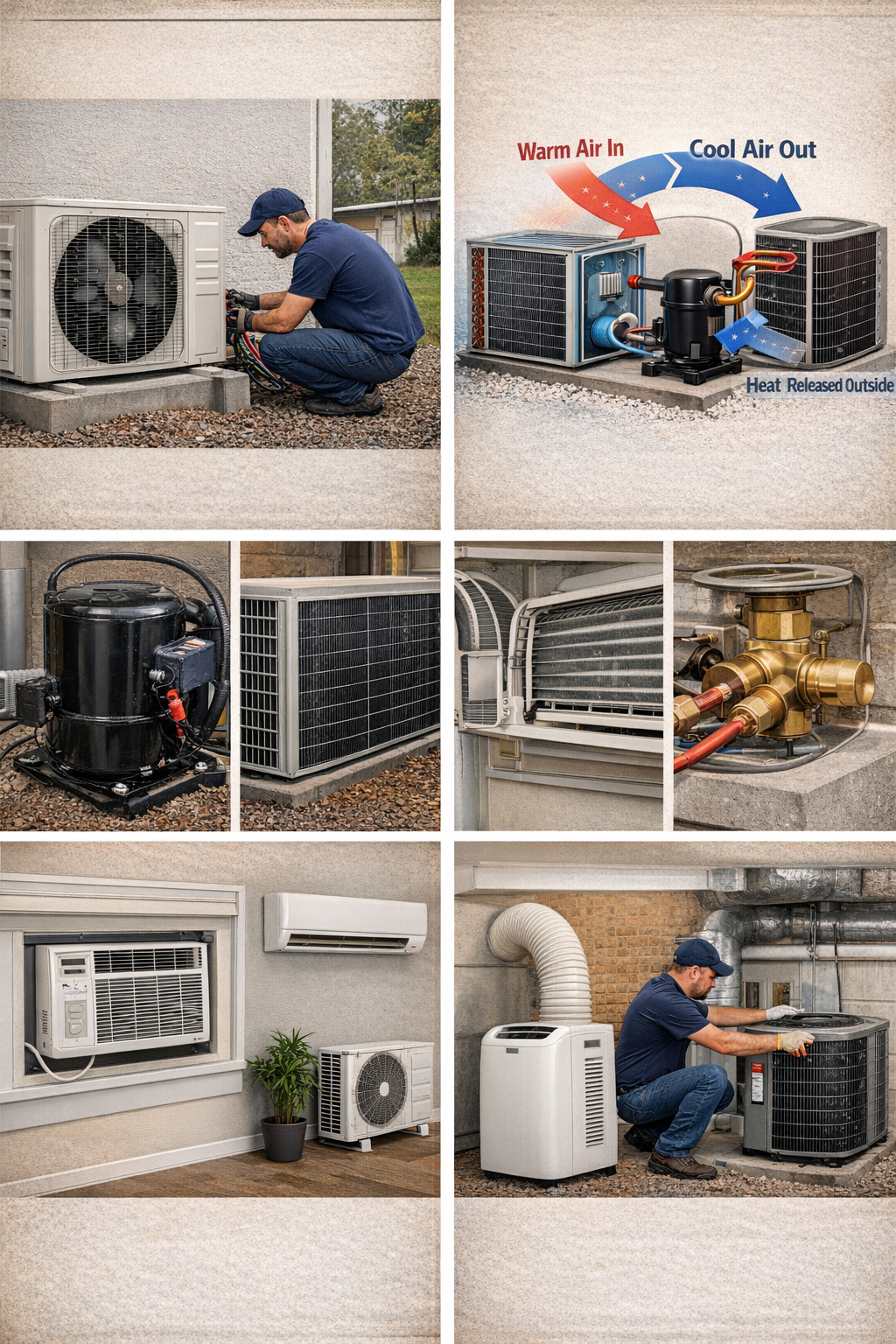
An air conditioner is a mechanical system designed to control indoor temperature, humidity, and, in many cases, air quality. While many people think of air conditioners simply as machines that “blow cold air,” their true function is to remove heat from indoor spaces and transfer it outdoors. The primary purpose of an air conditioner is to create a comfortable indoor environment—especially in hot or humid climates. Beyond cooling, modern systems also help regulate humidity levels, filter airborne particles, and improve overall air circulation. At its core, air conditioning is based on one simple scientific principle: heat moves from warmer areas to cooler areas. Air conditioners use this principle to extract heat from inside your home and release it outside, leaving your indoor space cooler and more comfortable. How Air Conditioners Work The Refrigeration Cycle Air conditioners operate using what’s known as the refrigeration cycle. This process relies on a chemical compound called a refrigerant, which absorbs and releases heat as it changes between liquid and gas states. Here’s how it works in simple terms: This continuous loop allows the system to maintain a stable indoor temperature. Main Components Every air conditioner, regardless of type, contains several key components: Compressor Often called the “heart” of the system, the compressor pressurizes the refrigerant and keeps it moving through the cycle. Condenser Coil Located in the outdoor unit (for split and central systems), the condenser releases the heat collected from indoors into the outside air. Evaporator Coil Positioned inside the home, this coil absorbs heat from indoor air as it passes over it. Expansion Valve This component regulates the flow of refrigerant and lowers its pressure before it enters the evaporator coil. Thermostat The thermostat monitors room temperature and signals the system to turn on or off based on your selected settings. Together, these parts create a closed-loop system that continuously removes heat and maintains comfort. Types of Air Conditioners Air conditioners come in various designs to suit different needs and building layouts. Window Air Conditioners Window units are compact, self-contained systems installed in a window or wall opening. They are ideal for cooling single rooms or small apartments. Because all components are housed in one unit, installation is relatively straightforward. Best for: Small spaces and budget-conscious users. Split Air Conditioners Split systems consist of two units: an indoor air-handling unit and an outdoor compressor/condenser unit. These systems operate more quietly and are common in homes and offices. They offer better aesthetics and efficiency compared to window units. Best for: Bedrooms, living rooms, and offices requiring quieter operation. Portable Air Conditioners Portable units are movable systems placed on the floor and vented through a window using an exhaust hose. They are flexible and require minimal installation. Best for: Temporary cooling or rental properties where permanent installation isn’t possible. Central Air Conditioning Systems Central air systems cool entire homes or buildings using ductwork to distribute conditioned air throughout multiple rooms. They are controlled by a central thermostat and are typically integrated into the home’s HVAC system. Best for: Whole-house cooling and consistent temperature control. Key Features and Specifications When shopping for an air conditioner, understanding technical specifications is essential. Cooling Capacity (BTU) Measured in British Thermal Units, BTU indicates how much heat the unit can remove per hour. Larger rooms require higher BTU ratings. Energy Efficiency Ratio (EER) Measures cooling efficiency under specific conditions. Seasonal Energy Efficiency Ratio (SEER) Represents overall efficiency across an entire cooling season. Higher SEER ratings mean better energy performance. Inverter vs. Non-Inverter Technology Air Filtration Systems Modern units may include filters for dust, pollen, allergens, and even odors. Smart Controls Wi-Fi-enabled systems allow remote control via smartphone apps and programmable schedules for energy savings. Energy Efficiency and Environmental Impact Air conditioners account for a significant portion of household electricity use, especially in hot climates. Choosing an energy-efficient model can substantially reduce power bills and environmental impact. Modern systems use improved refrigerants with lower environmental impact compared to older substances like R-22, which has been phased out in many countries. Governments often enforce efficiency standards and labeling systems to guide consumers toward more sustainable options. High-efficiency units not only lower emissions but also reduce long-term operating costs. Installation Requirements Proper installation plays a critical role in performance and longevity. Correct Sizing An undersized unit struggles to cool a room, while an oversized unit cycles on and off too frequently, wasting energy. Ventilation Portable and window units require proper venting. Split and central systems need adequate outdoor airflow around the condenser. Electrical Requirements Larger systems may require dedicated circuits. Professional Installation vs. DIY Maintenance and Care Routine maintenance keeps your air conditioner efficient and extends its lifespan. Clean or Replace Air Filters Dirty filters reduce airflow and strain the system. Check monthly during heavy use. Check Refrigerant Levels Low refrigerant can reduce cooling performance and damage the compressor. Clean Coils Both evaporator and condenser coils should remain free of dust and debris. Professional Servicing Annual inspections help identify small problems before they become costly repairs. Signs of Common Issues: Advantages and Limitations Advantages Limitations Understanding both sides helps homeowners make informed decisions. Common Problems and Troubleshooting Unit Not Cooling Properly Often caused by dirty filters, low refrigerant, or thermostat settings. Water Leakage May result from a clogged drain line or frozen evaporator coil. Strange Odors Usually due to mold buildup or dirty filters. Thermostat Malfunction Incorrect calibration can cause uneven cooling. Frozen Coils Often linked to restricted airflow or refrigerant issues. Early troubleshooting can prevent major system damage. Conclusion Air conditioners function by removing heat from indoor air and transferring it outdoors through a continuous refrigeration cycle. While the technology behind them is sophisticated, the goal is simple: provide consistent indoor comfort. Choosing the right type and size for your space is crucial for efficiency and performance. Equally important is regular maintenance, which ensures long-term reliability and lower operating costs. With proper selection, installation, and care, an air conditioner can provide years of dependable cooling and improved indoor living conditions.